If you're new here, you may want to subscribe to my RSS feed or Subscribe by Email. Thanks for visiting! Email This Post
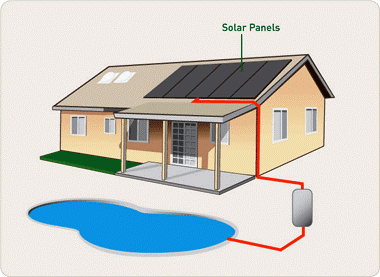 Solar panels can be an energy efficient way to consuming less to heat water for swimming pools.
With this solution you can use the hot water produced by thermal collectors to heat the pool, as well as for normal use (shower, kitchen, washing machine, etc.).
In the case of swimming pools, the solar thermal systems allow an extension of the period of use and some degree in water.
Moreover, the economic savings achieved are extremely interesting because the needs of thermal pools (especially indoors) is enormous.
How Solar Pool Heaters Work
A solar pool heating system works via black plastic panels or collectors capturing the energy from the sun and using it to heat the water in your pool. The materials used to make these systems are manufactured from high tech plastics which have been designed to resist weather and resist the sun’s ultraviolet radiation.
The materials are typically a flavor of polypropylene. Using your existing pool pump, water is circulated through the solar panels where it is heated by the sun and then returned to your pool. The collectors that sit on your roof typically come in the same sizes, no matter what manufacturer you get them from: 4ft x 8ft, 4ft x 10ft, or 4ft x 12ft.
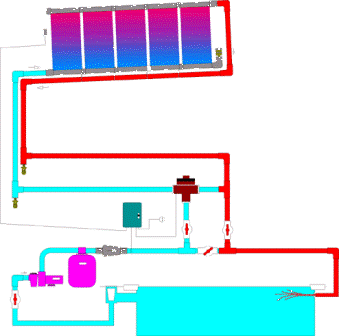
It’s formed by:
- A solar collector — the device through which pool water is circulated to be heated by the sun
- A filter — removes debris before water is pumped through the collector
- A pump — circulates water through the filter and collector and back to the pool
- A flow control valve — automatic or manual device that diverts pool water through the solar collector.
The liquid (water and antifreeze), which warms through the solar panels, is directed first of all in the coil inside the water tank heater, and when it reaches the desired temperature, it should be in a heat exchanger, where contact takes place the heat transfer fluid from the “solar” to the pool through the exchanger.
The collector panels are usually mounted on a nearby roof, or they can be ground-mounted on a tilted rack. Due to the low temperature difference between the air and the water, the panels are often unglazed.
The collectors should face South in the northern hemisphere, and North in the southern. If of fixed mounting angle, the collectors’ tilt should be optimized to warm the pool during the coolest months that the pool will be utilized; this optimal angle will vary with latitude.
The collectors must drain down by gravity, or be drained, for freeze protection in anything but extremely mild climates. Almost all locations in the U.S. have the potential for freezing.
In-Ground Pool - How a solar pool heater works
- Set your desired water temperature.
- Sensor determines most efficient time to run. (See solar pool controller)
- Your pool pump sends cold water from the pool through solar collectors.
- Solar collectors heat the water.
- 5. Warm, solar-heated water flows back to your pool.
Above-Ground Pool - How a solar pool heater works
- Your filter pump sends cold pool water through the solar panel.
- The solar panel transfer’s the sun’s heat to water inside the solar tubes.
- Warm, solar-heated water flows back to your pool.
Solar Pool Heater System Types
Unglazed Solar Pool Heating Collectors
Because of their inexpensive parts and simple design, unglazed collectors are far less expensive than glazed collectors. Unglazed collectors don’t include a glass covering (glazing). They are generally made of heavy-duty rubber or plastic treated with an ultraviolet (UV) light inhibitor to extend the life of the panels.
These unglazed systems can even work for indoor pools in cold climates if the system is designed to drain back to the pool when not in use. Even if you have to shut the system down during cold weather, unglazed collectors are more cost effective than installing a more expensive glazed collector system.
Glazed Solar Pool and Water Heating Collectors
Glazed collector systems are generally made of copper tubing on an aluminum plate with an iron-tempered glass covering, which increases their cost. In colder weather, glazed collector systems—with heat exchangers and transfer fluids—capture solar heat more efficiently than unglazed systems. Therefore, they can be used year-round in many climates. Glazed collectors also can be used to heat domestic hot water year-round.
Both glazed and unglazed collector systems should include freeze protection if they’ll be used in colder conditions.
Do solar systems cost a lot?
Solar, unlike electric or gas heaters, uses sunshine, and that sunshine is free - therefore there is no operating cost, and you are heating your oasis with a completely renewable, non-polluting, green, Eco-friendly source.
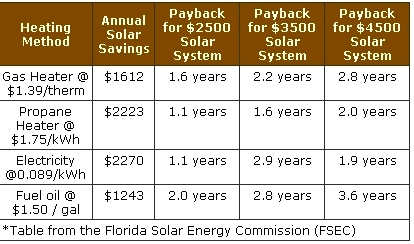
In addition, following the purchase cost ($2,500-$7,000), there are no ongoing associated utility bills.
Estimated costs of equipment, installation and energy supply for an above ground 24ft. (7.5m) diameter pool or an in-ground pool 15 x 30ft (4.6 x 9.2m)
When comparing pool heaters, it’s important to know that while propane and gas heaters can offer a lower initial investment, the cost of fuel needed to run them rapidly adds up season after season.
Propane is the most expensive type of system, followed by Natural gas (if it’s an option for your house) and then electric resistance, which all incur monthly fuel costs.
Solar Pool Heater Benefits
- Can extend swimming season Up to 12 months
- Ave. temp. rise up to 15-20º
- Have no operating costs
- No pollution, no fuel needed
- Usually last 20+ years
- Have a 10 Year warranty
- Quick and easy installation
- Minimal maintenance required

{ 0 comments… add one now }